GE Breakers in Construction: The Small Components That Keep Big Projects Powered and Protected

Construction News for GE Breakers

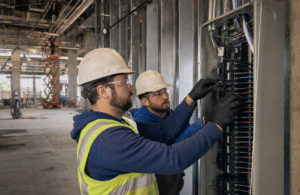
Construction projects are often measured by what can be seen: steel frames rising over a city, concrete foundations taking shape, cranes moving materials across a busy site, and skilled crews turning architectural plans into finished buildings. Behind that visible progress is an electrical system that must safely and reliably support everything from temporary jobsite equipment to the permanent power needs of the completed structure.

Circuit breakers are relatively small compared with generators, switchgear, transformers, and heavy construction machinery, but their role is essential. They monitor electrical circuits and interrupt power when unsafe conditions develop. A properly selected breaker can help prevent damaged equipment, overheated wiring, electrical fires, costly delays, and serious safety hazards.

For contractors, electricians, project managers, and building owners, dependable circuit protection is more than a technical detail. It is part of delivering a safe, compliant, and successful construction project. ⚡

Why Circuit Protection Matters on Construction Projects

Construction sites create demanding conditions for electrical systems. Power tools, welders, compressors, temporary lighting, lifts, ventilation equipment, pumps, and charging stations may operate simultaneously. Electrical demand can change quickly as different trades arrive, complete their work, and move to another section of the project.

Temporary power systems are also exposed to dust, moisture, vibration, temperature changes, accidental impacts, and repeated connection and disconnection. These conditions make careful equipment selection and installation particularly important. The Occupational Safety and Health Administration identifies electrocution as one of the serious hazards faced by construction workers, reinforcing the need for sound electrical practices at every stage of a project.

A circuit breaker is designed to open a circuit when the electrical current exceeds safe operating limits. This may happen because of an overload, short circuit, ground fault, damaged conductor, malfunctioning tool, or equipment failure. By interrupting the flow of electricity, the breaker helps limit damage and reduces the chance that an electrical problem will spread.

The basic operating principle is straightforward, but breaker selection is not. Voltage, amperage, interrupting capacity, number of poles, trip characteristics, environmental conditions, and compatibility with the electrical panel all affect whether a breaker is appropriate for a particular application.

The Role of GE Breakers in Construction Electrical Systems

GE Breakers are used in a variety of residential, commercial, industrial, and infrastructure applications. Depending on the equipment and project requirements, they may be installed in panelboards, distribution systems, control equipment, temporary power arrangements, renovations, and replacement applications.

Their primary responsibility is to protect circuits and connected equipment from excessive current. In a commercial building, individual breakers may serve lighting circuits, receptacles, heating and cooling equipment, elevators, pumps, fire protection systems, kitchen equipment, machinery, or technology infrastructure. On an active construction site, breakers may also protect temporary circuits supplying portable tools and other jobsite equipment.

Although breakers perform a protective function, they must be treated as part of a complete electrical system. The panel, conductors, grounding and bonding arrangements, connected loads, enclosures, and overcurrent protection must work together. Installing a breaker simply because it fits into a panel can create an unsafe condition if it is not listed, rated, and approved for that specific equipment.

Matching the Breaker to the Panel and Application

Compatibility is one of the most important considerations when replacing or specifying a circuit breaker. Breakers that look similar can have different mounting systems, bus connections, electrical ratings, and listing requirements. Physical fit alone does not establish safe compatibility.

The panel label, equipment documentation, breaker identification, and applicable electrical requirements should guide the selection. When documentation is missing or difficult to interpret, a qualified electrician should verify the correct component before installation. Guessing can result in poor contact with the bus, overheating, nuisance tripping, equipment damage, or failure during a fault.

It is also important to distinguish between older GE electrical equipment and products currently associated with ABB following its acquisition of GE Industrial Solutions. Existing buildings may contain legacy panelboards and breakers that remain in service for many years. Renovation contractors frequently encounter these systems when updating offices, schools, warehouses, retail properties, apartment buildings, and industrial facilities.

The general history and function of the circuit breaker demonstrate how overcurrent protection has evolved alongside increasingly complex electrical systems. Modern construction depends on this continued development to support higher loads, specialized equipment, automation, and connected building technology.

Protecting Schedules, Budgets, and Equipment

Electrical failures can affect much more than a single circuit. A tripped or damaged breaker may shut down tools, lighting, pumps, climate-control equipment, or other systems needed to keep work moving. If the failure affects critical temporary power, several trades may be forced to stop until the problem is identified and corrected.

That interruption can create labor inefficiencies, equipment downtime, missed inspections, and scheduling conflicts. On large projects, even a short electrical delay can have consequences across multiple subcontractors. Construction sequencing often depends on one crew completing its assignment before another can begin.

Reliable circuit protection helps reduce these risks, but breakers should never be used as a substitute for proper planning. Load calculations, panel schedules, conductor sizing, equipment coordination, and routine inspections remain essential. Breakers protect against defined electrical conditions; they cannot correct undersized wiring, loose connections, damaged equipment, or poorly designed distribution systems.

Cost pressures make careful planning even more important. The Associated General Contractors of America tracks industry conditions affecting contractors, while the U.S. Census Bureau’s construction spending reports illustrate the enormous scale of private and public building activity. With so much capital invested in construction, small electrical components can have a surprisingly large influence on project reliability and long-term performance.

Electrical Safety During Temporary Construction Power

Temporary power should receive the same careful attention as permanent electrical work. A system described as temporary may still operate for months or even years on a major development. During that time, it must support changing loads in a harsh and constantly evolving environment.

Breakers used for temporary service should be correctly rated and housed in suitable equipment. Panels should remain accessible, properly identified, and protected from physical damage. Open spaces must be covered, enclosures secured, and circuits clearly labeled. Extension cords and portable distribution equipment should be inspected regularly for damage.

Moisture is another significant concern. Outdoor work, concrete operations, plumbing installations, roof openings, and unfinished building envelopes can expose electrical equipment to water. The appropriate enclosures and protective devices must be used for the environment.

Construction professionals can follow developing safety practices through resources such as Engineering News-Record, which reports on major projects, safety issues, technology, and industry developments. Construction Dive also provides continuing coverage of construction operations, business conditions, regulation, and project delivery.

Renovation Projects and Legacy Electrical Equipment

Renovation work often presents challenges that new construction does not. Electrical panels may be decades old, labels may be incomplete, and previous modifications may not appear in the original drawings. Breakers from different product lines may have been installed over time, making a careful assessment necessary before work begins.

An electrician should examine the panel condition, bus connections, breaker types, available fault current, circuit loads, and signs of heat damage or corrosion. Discoloration, melted insulation, buzzing, burning odors, and repeated tripping can indicate conditions requiring immediate attention.

A breaker that trips repeatedly should not simply be reset again and again. The trip is a signal that the circuit may be overloaded or experiencing another electrical problem. The underlying cause should be located and corrected before the circuit returns to normal service.

Renovation teams also need to consider future demand. A panel that met the needs of a building years ago may be inadequate after the addition of modern HVAC systems, commercial kitchens, data equipment, electric vehicle charging, manufacturing machinery, or expanded tenant space. Breaker replacement alone cannot create electrical capacity that the service and panel were never designed to provide.

Industry reporting on construction technology shows how rapidly building systems are changing. Connected controls, energy monitoring, smart equipment, and advanced automation are increasing the need for coordinated electrical design.

Inspection, Maintenance, and Documentation

Circuit breakers are frequently installed and then ignored until something goes wrong. A stronger maintenance approach includes periodic visual inspection, accurate labeling, load verification, and investigation of abnormal conditions.

Dust and debris should be kept away from electrical equipment. Panel doors and covers should remain secured. Water intrusion, corrosion, overheating, and mechanical damage should be addressed promptly. Required maintenance must follow the equipment manufacturer’s instructions and established safety procedures.

Documentation is equally valuable. Accurate panel schedules allow electricians and facility personnel to identify circuits quickly during maintenance or an emergency. Records of replacement components, test results, modifications, and inspections can reduce confusion during future renovations.

Project teams should also preserve equipment manuals, approved submittals, as-built drawings, and commissioning information. These documents become part of the building’s operational history and may save considerable time when components eventually require service or replacement.

Planning for the Building’s Long-Term Electrical Needs

A construction project does not end when the final inspection is complete. The electrical system will support occupants, equipment, and building operations for years. Decisions made during design and construction can determine how easily the system can be maintained, expanded, or repaired.

Providing clear labeling, accessible panels, sensible circuit organization, and accurate documentation supports future facility management. Allowing appropriate capacity for anticipated growth can also reduce the need for disruptive upgrades.

Construction firms increasingly rely on industry data and reporting to understand market changes, labor conditions, materials pricing, and emerging building requirements. The Associated General Contractors’ construction employment resources offer insight into workforce trends that influence project staffing and electrical trade availability.

Good planning brings designers, electrical contractors, general contractors, inspectors, suppliers, and owners into the same conversation. Circuit protection should be coordinated with the rest of the electrical design instead of treated as a last-minute purchasing decision.

Conclusion

Major construction projects depend on thousands of individual components working together. Circuit breakers may occupy only a small portion of an electrical room, yet they help protect valuable equipment, support worker safety, and keep essential systems operating.

The correct breaker must match the panel, electrical ratings, project conditions, and applicable requirements. Proper installation must be supported by accurate load calculations, suitable conductors, secure connections, effective grounding, clear labeling, and ongoing maintenance.

From temporary jobsite power to the completed building’s permanent distribution system, dependable circuit protection contributes to fewer interruptions and safer operation. These small components perform a significant job, helping construction teams deliver buildings that remain powered, protected, and prepared for the demands ahead.

What Memphis Construction Crews Should Know Before Removing a Tree

Construction News for Arborist Near Me Memphis

Memphis construction crews move fast. Between site preparation, grading, utility access, equipment staging, drainage planning, building schedules, inspections, and customer expectations, it can be tempting to treat tree removal as just another early step in the construction process. A tree is in the way, the project needs to move forward, and the crew has work to do. Simple enough.

But on many construction sites, removing a tree is not just a landscaping decision. It can affect safety, soil stability, stormwater behavior, permitting, property value, neighboring structures, underground utilities, and the long-term success of the project. 🌳

In a growing market like Memphis, where residential builds, commercial renovations, infrastructure improvements, and property redevelopment continue to shape the region, construction crews need to understand the risks before cutting, clearing, or disturbing mature trees. The right planning can help prevent delays, reduce liability, protect nearby structures, and keep a jobsite safer from the beginning.

Tree Removal Is a Construction Decision, Not Just a Cleanup Task

Tree removal often happens before the main construction work begins, which is why it may not always receive the same attention as framing, concrete, roofing, electrical, or site engineering. However, trees are part of the site conditions. Their roots, canopies, trunks, and surrounding soil interact with everything around them.

A mature tree may have roots extending far beyond the visible canopy. Those roots can be near foundations, sidewalks, retaining walls, utilities, septic lines, drainage paths, driveways, parking lots, and neighboring properties. Removing the tree without understanding the root system can create unexpected movement in the soil or expose hidden site problems.

Construction itself is broadly defined as the process of delivering buildings, infrastructure, industrial facilities, and related improvements, as explained by Wikipedia’s overview of construction. Because tree removal can influence the condition of the land before building begins, it belongs in the same planning conversation as grading, access, and site safety.

For Memphis construction crews, the best approach is to identify tree-related risks before equipment arrives. That means looking at the location of the tree, its condition, its relationship to the proposed construction area, and whether it should be removed, preserved, pruned, or protected during the project.

Why Memphis Construction Sites Need Tree Risk Awareness

Memphis properties often include large shade trees, older root systems, clay-heavy soils, stormwater concerns, and developed neighborhoods where construction space may be tight. A tree that looks manageable from the surface may become a major issue once work begins.

Dead, diseased, leaning, or structurally compromised trees can create safety hazards for crews, vehicles, materials, and nearby buildings. A weakened tree may fail during excavation, heavy vibration, storms, or soil disturbance. Even healthy trees can become hazardous if their root zones are cut, compacted, or buried during construction.

This matters because construction sites are already active environments with workers, machines, deliveries, temporary fencing, dumpsters, scaffolding, and changing ground conditions. Adding tree instability to that environment increases the chance of property damage or injury.

Before removing a tree, crews should evaluate whether the tree is close to power lines, roads, sidewalks, homes, commercial buildings, parking areas, fences, underground utilities, or drainage features. A rushed removal can damage more than the tree itself. It can create expensive repairs that slow down the project.

Tree Roots Can Affect Excavation, Grading, and Drainage

One of the biggest mistakes construction crews can make is only looking at the trunk and branches. The root system is often where the real construction conflict begins.

Roots can interfere with excavation for foundations, footers, utility trenches, driveways, patios, retaining walls, drainage systems, and parking lots. Cutting major roots can destabilize a tree that was originally intended to remain. Removing a tree can also leave underground voids, decaying root channels, and loosened soil areas that may affect compaction or drainage.

Memphis construction crews should also consider how tree removal changes water movement across a property. Trees absorb water, slow runoff, and help stabilize soil. Once a large tree is removed, stormwater may move differently across the site. This can matter for erosion control, basement protection, crawl spaces, pavement performance, and landscaping after the project is complete.

Tennessee has continued to focus on infrastructure and construction investment, with the Tennessee Advisory Commission on Intergovernmental Relations reporting significant public infrastructure needs across the state. That kind of statewide focus on infrastructure, documented by TACIR’s report on Tennessee public infrastructure improvements, reinforces why site conditions should be treated seriously before construction begins.

Permits, Property Lines, and Local Requirements Should Come First

Tree removal can become complicated when a tree sits near a property line, right-of-way, drainage easement, shared fence, public sidewalk, commercial entrance, or utility area. Construction crews should not assume every tree on or near a jobsite can be removed without review.

Depending on the property, project type, and location, there may be municipal requirements, neighborhood restrictions, commercial property standards, development conditions, or utility coordination issues involved. Even when formal tree permits are not required, documentation is still valuable.

Before removal, crews should confirm ownership of the tree, identify nearby easements, check project plans, and communicate with the property owner or general contractor. If the tree affects public access, roadway visibility, sidewalk safety, or stormwater management, the decision may need extra review.

Local construction activity often involves coordination between city, county, and state agencies. For example, Shelby County’s current construction information shows how road, bridge, and public improvement projects can involve multiple layers of planning and shared responsibility. Private construction crews should bring the same mindset to tree-related decisions on their own jobsites.

An Arborist Can Help Prevent Costly Construction Delays

Calling an arborist before removing a tree can save construction crews from mistakes that become expensive later. An arborist can evaluate tree health, identify structural defects, assess root conflicts, recommend safe removal methods, and help determine whether a tree can be preserved during construction.

This is especially important when a project owner wants to keep certain trees for shade, appearance, privacy, erosion control, or property value. Construction damage can kill a tree slowly. A tree may look fine during the job, then decline months later because its roots were cut, compacted, or covered. When that happens, the property owner may blame the construction process.

A professional arborist can also help crews decide where to place equipment, temporary fencing, materials, soil piles, and access paths to reduce damage to trees that are staying. For projects where tree removal is unavoidable, an arborist can help ensure the work is done with better planning and fewer surprises.

For crews or property owners searching locally, Arborist Near Me Memphis is an important resource when tree safety, construction planning, and responsible removal need to be handled before the job moves forward.

Tree Removal Around Roads, Utilities, and Access Points Requires Extra Care

Construction crews often work near driveways, alleys, parking lots, roads, loading areas, and utility corridors. These are the same places where tree removal can be most sensitive.

Branches can interfere with equipment access. Roots can affect pavement. Tree trunks can limit sightlines. Dead limbs can fall near workers or traffic. Underground utilities can run through the root zone. Removing a tree in these areas requires planning because the jobsite may affect not only the construction crew, but also pedestrians, drivers, tenants, customers, neighbors, and utility workers.

The Tennessee Department of Transportation continues to maintain information on transportation projects through its TDOT transportation projects page, which highlights how road-related work requires careful planning, regional coordination, and attention to public impact. While private construction sites are different from highway projects, the lesson is similar: work near access routes and public movement should be planned carefully before crews begin.

For Memphis contractors, that means tree removal should be discussed during pre-construction meetings, not after a machine operator discovers the tree is blocking access. The earlier the issue is addressed, the easier it is to plan safe sequencing.

Large Construction Projects Show Why Site Planning Matters

Memphis continues to see major construction and infrastructure activity, including projects connected to transportation, commercial development, and public facilities. Large projects receive attention because they involve budgets, schedules, public safety, and long-term impact. Smaller construction jobs may not make headlines, but they still benefit from the same kind of careful site planning.

For example, Memphis International Airport’s construction information shows how major property improvements involve phased planning and modernization work. Engineering News-Record has also covered how big projects are supporting the Memphis construction market, including significant investment activity in the region.

The takeaway for local construction crews is simple. Whether the job is a residential addition, a commercial renovation, a parking lot expansion, a utility upgrade, or a full site redevelopment, early planning protects the schedule. Tree removal should not be treated as an afterthought because it can affect everything that happens next.

Crews Should Document Tree Conditions Before Work Begins

Documentation protects everyone involved. Before removing or working near trees, construction crews should take photos, note the location of trees, identify visible defects, and record any concerns about leaning, cracks, cavities, dead limbs, root damage, fungi, soil heaving, or proximity to structures.

This documentation can be useful if a property owner, neighbor, inspector, insurance company, or project manager has questions later. It can also help clarify whether tree damage existed before construction began or occurred during the project.

A simple tree review can be included in the site preparation checklist. Crews should note which trees are to be removed, which are to remain, and which require protection. Tree protection zones should be marked clearly so equipment operators know where not to drive, dig, park, or store materials.

This kind of planning is not just about tree preservation. It is about reducing confusion, preventing conflict, and keeping the construction process cleaner from start to finish.

Safe Tree Removal Supports a Safer Jobsite

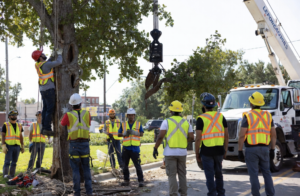
Tree removal can involve chainsaws, rigging, lifts, cranes, falling limbs, heavy trunks, unstable ground, and nearby structures. When removal happens on an active or soon-to-be-active construction site, the risks increase because other work may be happening nearby.

Crews should consider whether the tree can be removed safely with available space, whether traffic or pedestrian control is needed, whether utility companies must be contacted, and whether the removal should happen before or after certain site preparation steps.

Removing a tree without proper planning can damage equipment, delay subcontractors, block access, create debris hazards, or leave stumps and roots that interfere with grading. In some cases, it can also create emergency conditions if the tree shifts, splits, or falls unpredictably.

The safest construction crews are the ones that slow down at the beginning so the rest of the job can move faster. Tree removal is one of those moments where careful planning can prevent major problems.

Conclusion

Memphis construction crews should know that tree removal is more than clearing space. It is a site safety issue, a planning issue, a drainage issue, a utility issue, and often a liability issue. Trees interact with soil, structures, access points, neighboring properties, and long-term land performance. Removing one without understanding those connections can create problems that reach far beyond the stump.

Before a tree is removed, crews should evaluate its condition, location, root system, impact on drainage, relationship to utilities, and effect on the construction schedule. They should document existing conditions, communicate with the property owner, and bring in a qualified arborist when the tree presents risk or uncertainty.

In a city where construction and redevelopment continue to shape neighborhoods, commercial properties, roads, and public spaces, responsible tree planning helps Memphis crews work smarter. It protects workers, reduces delays, supports better site outcomes, and helps the finished project stand on stronger ground.

Construction Pros Reveal the HVAC Repair San Jose Homeowners Should Schedule Before It Gets Expensive

Construction News for HVAC Repair San Jose

San Jose homeowners already know that construction, remodeling, repairs, and home improvement projects can get expensive quickly. A small issue behind a wall, inside an attic, beneath a crawl space, or around a mechanical system can turn into a major bill when it is ignored too long. That is especially true when it comes to heating and cooling systems. HVAC problems often begin quietly, but once they affect comfort, indoor air quality, energy use, or surrounding construction materials, the cost of waiting can grow fast. 🏗️

Construction professionals see this pattern all the time. A homeowner starts with a simple renovation, room addition, kitchen remodel, garage conversion, or roofing project, only to discover that the HVAC system was already struggling. Weak airflow, uneven temperatures, dirty ducts, worn electrical components, leaking condensate lines, aging insulation, and outdated equipment can all become more serious when construction work exposes hidden problems or changes the way air moves through the home.

San Jose is a city where older homes, modern remodels, new construction, accessory dwelling units, and major development projects all exist side by side. According to the City of San José Development Services Permit Center, building, planning, fire, and public works permits are all part of the local development process. That matters for homeowners because HVAC systems are not separate from the structure of the home. They are connected to safety, code compliance, comfort, energy performance, and long-term property value.

For homeowners planning any construction-related improvement, scheduling the right HVAC repair early can help prevent expensive surprises later.

Why HVAC Repair Matters Before Construction Work Begins

Construction projects can put extra stress on an HVAC system. Dust, debris, temporary airflow restrictions, open walls, removed insulation, and changes to interior layout can all affect heating and cooling performance. Even a smaller project can reveal problems that were already developing inside the system.

For example, a remodel may expose poorly sealed ducts. A room addition may show that the existing system is not sized to handle the added square footage. A roofing job may reveal attic ventilation issues that make the cooling system work harder. A bathroom or kitchen renovation may uncover moisture concerns that affect air quality and mechanical performance.

When construction pros recommend HVAC service before major work begins, they are not just thinking about comfort. They are thinking about the entire building system. A home functions as one connected structure. The framing, insulation, windows, roof, ventilation, electrical system, plumbing, and HVAC equipment all influence one another. Ignoring the HVAC system during construction planning can lead to higher energy bills, failed inspections, uncomfortable rooms, and future repair costs that could have been avoided.

Scheduling HVAC Repair San Jose before a construction project becomes more expensive is a smart way to protect the home, the project budget, and the finished result.

The HVAC Problems Construction Pros Notice First

One of the first things construction professionals notice is uneven temperature throughout a home. If one room is always too hot and another is too cold, the issue may not be solved by simply replacing windows, adding insulation, or remodeling the space. The real problem may be weak airflow, duct leakage, blocked vents, an aging blower motor, or an HVAC system that is no longer performing properly.

Another common warning sign is excessive dust. Construction naturally creates dust, but homes with leaky ducts or poor filtration may already be circulating dust before work begins. Once demolition, sanding, drywall work, or flooring installation starts, the HVAC system can pull particles into the return air and push them throughout the house. This can make indoor air quality worse and may also strain the system.

Strange noises are also important. Rattling, buzzing, grinding, or banging sounds can point to loose parts, motor problems, electrical issues, or duct movement. Construction activity may make these sounds more noticeable, but the underlying problem usually started earlier.

Moisture is another major concern. Condensation around HVAC components, clogged drain lines, or poor humidity control can damage drywall, flooring, trim, insulation, and framing. In a construction setting, moisture problems can quickly become expensive because finished materials may need to be removed and replaced if the issue is not corrected.

San Jose Homes Have Unique HVAC and Construction Challenges

San Jose homeowners deal with a mix of property types. Some homes were built decades ago, while others have been remodeled, expanded, or upgraded several times. The city has also seen ongoing growth, redevelopment, housing demand, and infrastructure changes. The City of San José Major Development Projects page highlights the scale of development activity in the area, and that same growth-minded environment influences how homeowners think about improving and protecting their own properties.

Older homes may have ductwork that was never designed for today’s comfort expectations. Some may have additions that were connected to the original HVAC system without proper balancing. Others may have aging furnaces, air conditioners, thermostats, or ventilation components that still work but no longer work efficiently.

Newer homes and remodeled homes can have different issues. Tighter construction, modern windows, upgraded insulation, and changed layouts can improve efficiency, but they can also affect airflow and ventilation. A system that worked before a remodel may need adjustment after walls are moved, rooms are added, or living spaces are opened up.

This is why HVAC repair should be considered part of responsible construction planning. The system should be checked before expensive finishes are installed, before walls are closed, and before the homeowner assumes the comfort problem will fix itself.

How HVAC Problems Can Increase Construction Costs

The most expensive construction problems are often the ones that require work to be done twice. If a homeowner completes a remodel and then discovers that the HVAC system cannot properly heat or cool the space, the solution may require cutting into new drywall, moving vents, adjusting ducts, replacing insulation, or modifying finished areas.

A small duct repair before construction may be affordable. The same duct repair after new ceilings, walls, paint, and trim are completed can be much more expensive. A clogged condensate drain may be simple to clear early. If it causes water damage behind finished walls or near new flooring, the cost can multiply.

Poor HVAC performance can also affect materials. High humidity can damage wood, flooring, cabinets, and paint. Poor ventilation can contribute to odors and stale indoor air. Overworked equipment can lead to breakdowns at the worst possible time, especially during hot weather.

The City of San José Building Division provides information related to building permits and plan review, which reinforces an important point for homeowners: construction is not only about appearance. It is also about safety, systems, performance, and compliance. HVAC repair supports those same goals.

HVAC Repair Before Additions, ADUs, and Garage Conversions

Room additions, garage conversions, and accessory dwelling units are especially important times to evaluate HVAC performance. Adding livable square footage changes the heating and cooling load of a property. If the existing system is already struggling, the added space can make the problem worse.

A converted garage may need proper heating, cooling, ventilation, insulation, and duct planning. An added bedroom, office, or family room may require better airflow. An ADU may need a separate system or a carefully designed solution depending on the property layout.

San Jose’s continued attention to housing, infill development, and urban growth makes this especially relevant. The Downtown West Mixed-Use Plan shows how large-scale planning in the city connects transportation, housing, development, and community growth. On a smaller scale, homeowners face similar planning decisions inside their own properties. Every improvement should be designed to function well after the work is complete.

HVAC repair before an addition or conversion can help identify whether the system needs a repair, adjustment, cleaning, duct modification, thermostat upgrade, or larger equipment discussion before construction moves forward.

The Role of Airflow During Remodeling

Airflow is one of the most overlooked parts of home comfort. Homeowners often focus on the furnace, air conditioner, or thermostat, but construction pros know that airflow problems can make even good equipment perform poorly.

Blocked vents, undersized ducts, damaged ductwork, closed interior doors, poor return air placement, and air leaks can all reduce comfort. During a remodel, airflow may change because walls are removed, rooms are opened, doors are replaced, or ceilings are modified. If the HVAC system is not inspected during the process, the finished space may look beautiful but feel uncomfortable.

Airflow issues can also affect energy costs. When conditioned air does not move properly, the system runs longer to reach the desired temperature. Longer run times can increase wear on motors, compressors, electrical components, and other parts.

The best time to correct airflow problems is before the project is finished. Once flooring, drywall, cabinets, ceilings, and paint are complete, access becomes more difficult and repair costs often rise.

Why Homeowners Should Pay Attention to San Jose Construction Trends

San Jose construction news can help homeowners understand the bigger picture around permits, housing demand, development pressure, and property improvement. Local reporting from San José Spotlight’s development section regularly covers housing, development, and planning issues in the city and surrounding area. While large projects may seem separate from a single-family home repair, they are part of the same local environment where property values, construction standards, labor demand, and improvement decisions matter.

Homeowners who stay aware of local construction trends are often better prepared to make smart repair decisions. When demand for contractors is high, waiting until an emergency can make scheduling harder. When building materials, labor, or energy costs rise, small repairs can become more expensive. When neighborhoods improve and property values increase, maintaining essential systems like HVAC becomes even more important.

San Jose is also a major city with a long history of growth, technology, housing expansion, and redevelopment. The San Jose, California Wikipedia page provides broad background on the city, its size, economy, and regional importance. That context matters because homeowners are not just maintaining a house. They are protecting an asset in one of California’s most important real estate markets.

HVAC Repair Helps Protect Indoor Air Quality

Construction dust is not the only air quality concern inside a home. A neglected HVAC system may circulate dust, pollen, debris, odors, and other particles. Dirty filters, clogged coils, leaking ducts, and poor ventilation can all reduce indoor air quality.

Before construction begins, homeowners should make sure the system is working properly and that filters are changed. During construction, returns and vents may need protection from dust and debris. After construction, the system may need another inspection or cleaning to make sure particles have not affected performance.

Indoor air quality is especially important in homes with children, older adults, pets, allergy concerns, or anyone sensitive to dust and airborne particles. A clean, properly functioning HVAC system supports a healthier and more comfortable home during and after the construction process.

Energy Efficiency Starts With Repair, Not Replacement

Many homeowners assume that a struggling HVAC system automatically needs replacement. Sometimes replacement is the right choice, especially if the system is old, inefficient, or frequently breaking down. However, in many cases, targeted repairs can improve performance and delay the need for a full replacement.

A worn capacitor, faulty thermostat, dirty coil, clogged drain, weak blower component, refrigerant issue, loose electrical connection, or duct problem may cause performance issues that can be corrected without replacing the entire system. The key is finding the issue early.

Construction pros often recommend addressing repairs before bigger work begins because it gives homeowners more control. Emergency replacement during a remodel can disrupt the schedule and increase stress. Planned repair gives the homeowner time to make informed decisions.

Energy efficiency is also tied to construction quality. Insulation, windows, air sealing, ventilation, and HVAC performance all work together. A repair that helps the system run efficiently can make the rest of the home improvement project more successful.

The Best Time to Schedule HVAC Repair

The best time to schedule HVAC repair is before the system fails, before construction begins, and before expensive finishes are installed. Homeowners planning a remodel, addition, roof replacement, insulation upgrade, kitchen renovation, bathroom remodel, garage conversion, or ADU project should have the HVAC system inspected early in the planning process.

This does not mean every home needs major work. It means the homeowner should know the condition of the system before the project budget is fully committed. Early information helps prevent surprises.

A professional HVAC inspection can help identify worn parts, airflow concerns, duct issues, thermostat problems, drainage concerns, and signs of inefficient operation. Once those issues are known, repairs can be scheduled in the right order, with less disruption to the construction timeline.

Conclusion

Construction pros reveal the same lesson again and again: small HVAC problems are easier and less expensive to fix before they become major construction problems. San Jose homeowners who plan ahead can protect their comfort, budget, indoor air quality, energy efficiency, and property value by addressing HVAC repair before remodeling, additions, conversions, or other home improvement projects move too far forward.

A home is more than walls, paint, flooring, and fixtures. It is a connected system, and the HVAC system plays a major role in how that home feels and performs every day. When airflow, heating, cooling, ventilation, and moisture control are ignored, even a beautiful construction project can leave homeowners frustrated.

The smartest approach is simple. Schedule HVAC repair early, fix hidden problems before finished materials are installed, and make sure the heating and cooling system is ready to support the home after the construction work is complete. For San Jose homeowners, that kind of planning can prevent expensive surprises and help every improvement deliver better long-term results.

How Chemical Manufacturing Companies Are Quietly Building the Future of Construction 🏗️

Construction News for Chemical Manufacturing Companies Near Me

The construction industry often gets attention for towering cranes, concrete pours, new subdivisions, commercial developments, bridges, highways, and massive infrastructure projects. What people do not always see is the science behind the scenes. Long before a contractor installs flooring, seals a roof, protects steel, pours concrete, waterproofs a foundation, or applies a specialty coating, chemical manufacturing companies have already played a major role in making that project stronger, safer, more efficient, and more durable.

Modern construction is no longer built with raw materials alone. It is built with engineered solutions. Adhesives, sealants, coatings, waterproofing systems, concrete additives, corrosion inhibitors, cleaning chemicals, insulation materials, flooring compounds, industrial lubricants, fire-resistant treatments, and protective finishes all help shape the way buildings and infrastructure perform over time. These materials may not always be visible once a project is complete, but they often determine whether that structure can withstand weather, moisture, chemical exposure, heavy use, and changing environmental demands.

As construction companies face tighter timelines, higher material costs, labor shortages, sustainability expectations, and stricter safety requirements, the relationship between construction and chemical manufacturing has become more important than ever. Industry resources such as Construction Dive continue to report on the trends affecting builders, contractors, developers, and suppliers, and many of those trends connect directly to the advanced materials being used on job sites every day.

Chemical Manufacturing Is Behind Many Modern Building Materials

When most people think about construction materials, they think about lumber, steel, concrete, glass, roofing, drywall, brick, and stone. Those materials still matter, but the performance of those materials often depends on chemical innovation. Concrete may be strengthened with admixtures. Steel may be protected with anti-corrosion coatings. Wood may be treated for durability. Roofing systems may depend on membranes, adhesives, and sealants. Flooring may require resins, epoxies, primers, and finish coatings.

Chemical manufacturers help create the formulas that allow construction materials to last longer and perform better under pressure. A parking garage exposed to water, oil, road salt, and vehicle traffic needs more than concrete alone. A hospital floor needs coatings that support sanitation, durability, and easy maintenance. A warehouse roof needs sealing systems that can stand up to heat, UV exposure, and heavy rain. A manufacturing facility may need chemical-resistant flooring and protective wall coatings to maintain safety and compliance.

The construction industry is built on reliability. Materials need to perform as expected, because failure can lead to expensive repairs, safety risks, downtime, and liability. That is why chemical manufacturing companies are so valuable to contractors, engineers, architects, and property owners. They help provide the specialized products that make buildings stronger from the inside out.

Construction Depends on Better Adhesives, Sealants, and Coatings

One of the biggest ways chemical manufacturing companies support construction is through adhesives, sealants, and protective coatings. These products are used across residential, commercial, industrial, and infrastructure projects. They help bond materials, close gaps, prevent leaks, resist chemicals, reduce corrosion, and protect surfaces from wear.

Sealants are especially important because water intrusion is one of the most common causes of building damage. A small failure around a window, roofline, expansion joint, wall penetration, or foundation area can create major problems over time. Mold, rot, structural damage, interior staining, insulation failure, and energy loss can all begin with moisture finding a path into a building. High-quality chemical sealants help prevent those issues by creating flexible, durable barriers.

Coatings are just as important. Protective coatings are used on steel, concrete, masonry, floors, roofs, tanks, pipes, bridges, and equipment. These coatings can be designed to resist abrasion, corrosion, heat, chemicals, moisture, and UV exposure. In industrial construction, coatings are often essential because the building may be exposed to harsh chemicals, constant cleaning, heavy machinery, or extreme temperatures.

Publications such as Engineering News-Record regularly cover major construction projects, infrastructure work, and industry innovation. Behind many of those large-scale projects are chemical products that help extend service life, reduce maintenance needs, and improve long-term performance.

Concrete Innovation Is Changing the Way Structures Are Built

Concrete remains one of the most important materials in construction, but modern concrete is far more advanced than many people realize. Chemical admixtures can change how concrete flows, cures, strengthens, resists water, handles temperature changes, and performs under pressure. These additives allow contractors to work more efficiently while improving the final quality of the structure.

Some admixtures help concrete set faster, which can be useful when schedules are tight or weather conditions are challenging. Others slow the curing process to make placement easier in hot climates. Some improve workability so concrete can be pumped, poured, or finished more effectively. Others increase strength, reduce shrinkage, improve durability, or make concrete more resistant to freeze-thaw cycles.

Chemical manufacturing companies also contribute to repair mortars, grouts, bonding agents, curing compounds, concrete cleaners, surface hardeners, and waterproofing products. These products are used in everything from sidewalks and driveways to stadiums, bridges, commercial towers, manufacturing plants, and public infrastructure.

According to the U.S. Census Bureau’s construction spending resources, construction activity represents a major area of economic measurement in the United States. That scale makes material performance extremely important. When billions of dollars are being invested into construction, better materials can help reduce waste, extend building life, and protect the value of those projects.

Sustainability Is Pushing Chemical Manufacturing Forward

Sustainability has become a major focus in construction. Developers, builders, municipalities, and property owners are looking for ways to reduce waste, improve energy efficiency, lower emissions, and choose materials that support long-term environmental goals. Chemical manufacturing companies are helping meet those demands by developing products that are more efficient, longer lasting, lower in volatile organic compounds, and better suited for green building practices.

Low-VOC paints, adhesives, coatings, sealants, and flooring systems can help improve indoor air quality. Waterproofing products can help buildings last longer and avoid premature repair. Better insulation materials can reduce energy use. Protective coatings can extend the life of steel, concrete, and roofing systems, reducing the need for replacement materials. Cleaning and maintenance chemicals can also be formulated to support safer use and environmental responsibility.

The Associated General Contractors of America has covered the importance of green construction and the role contractors play in building more efficient structures. Chemical manufacturing fits directly into that movement because many sustainable construction goals depend on advanced material science.

Sustainability in construction is not only about what gets built. It is also about how long it lasts. A building that performs well for decades is more resource-efficient than one that requires constant repair, replacement, or renovation. Chemical products that protect structures from water, corrosion, chemicals, heat, and wear can help reduce the environmental impact of construction over time.

Industrial and Commercial Construction Need Specialized Chemical Solutions

Industrial and commercial construction projects often have more demanding requirements than standard residential buildings. Warehouses, chemical plants, food processing facilities, hospitals, laboratories, schools, manufacturing sites, parking garages, data centers, and transportation hubs may all require specialized chemical products.

A food processing facility may need flooring that resists moisture, cleaning chemicals, and bacteria growth. A data center may need fire-resistant materials, anti-static flooring, precision cleaning solutions, and thermal management support. A chemical plant may require corrosion-resistant coatings, containment systems, industrial cleaners, and safety-focused surface treatments. A parking garage may need deck coatings, concrete repair materials, expansion joint sealants, and anti-slip finishes.

This is where local sourcing and supplier relationships become especially valuable. Contractors and facility managers often search for reliable suppliers who understand industrial needs, delivery timelines, and product compatibility. For businesses looking for regional support, Chemical Manufacturing Companies Near Me can be an important search when trying to find chemical manufacturing support for construction-related applications.

The right chemical partner can help construction companies source products that fit the specific demands of a project. That may include custom formulations, bulk supply, specialty packaging, technical support, and guidance on product use. In construction, choosing the wrong material can create delays and costly failures. Choosing the right chemical solution can help a project move forward with greater confidence.

Construction News Shows a Growing Focus on Materials and Supply Chains

Construction is heavily affected by material availability, pricing, logistics, and supply chain reliability. When materials are delayed or costs increase, entire projects can be affected. Chemical manufacturing companies help support construction supply chains by producing and distributing many of the products contractors rely on to keep work moving.

The construction industry has seen how important supply chain planning can be. Adhesives, coatings, insulation materials, cleaning chemicals, waterproofing products, concrete additives, and other specialty materials may not always receive the same public attention as steel or lumber, but they can still delay a project when they are unavailable. A contractor cannot complete a roof without the right adhesive or sealant. A flooring crew cannot finish a commercial space without the correct primer, coating, or curing product. A concrete repair project cannot move forward without compatible bonding agents, patching materials, and protective treatments.

Resources such as The Construction Index and Construction Business Owner regularly highlight the business side of construction, including market conditions, materials, contractors, and industry developments. These topics matter because construction success depends on more than skilled labor. It also depends on dependable products, strong supplier networks, and materials that arrive when they are needed.

Chemical manufacturing companies that serve construction markets help reduce uncertainty. They can support contractors with consistent supply, product knowledge, and chemical solutions designed for real-world job site conditions.

Advanced Materials Are Improving Safety and Building Performance

Safety is one of the most important priorities in construction. Chemical manufacturing contributes to safety in several ways. Fire-resistant coatings, anti-slip flooring systems, corrosion inhibitors, cleaning chemicals, mold-resistant treatments, protective sealants, and high-performance insulation materials all help create safer buildings and job sites.

Construction workers also rely on chemicals for equipment maintenance, surface preparation, dust control, sanitation, and cleanup. Properly formulated products can help reduce hazards, improve working conditions, and support compliance with safety standards. In finished buildings, chemical products continue to contribute to safety by protecting surfaces, improving hygiene, preventing moisture damage, and reducing the risk of structural deterioration.

The broader role of construction in society is explained in Wikipedia’s overview of construction, which describes construction as the process of delivering buildings, infrastructure, and industrial facilities. Chemical manufacturing supports that process by improving the materials used to build and maintain those structures.

As buildings become more advanced, the materials inside them must keep up. A modern commercial building may include energy-efficient systems, specialty coatings, advanced roofing, high-performance flooring, fire protection products, waterproofing membranes, and sustainable finishes. Chemical manufacturers help make those systems possible.

The Future of Construction Will Be Built With Science

The future of construction will not only be shaped by architects, engineers, contractors, and developers. It will also be shaped by chemists, product developers, material scientists, manufacturers, and suppliers. As the industry moves toward stronger, smarter, more efficient, and more sustainable buildings, chemical manufacturing companies will continue to play a quiet but powerful role.

New formulas will help materials last longer. Better coatings will protect infrastructure from corrosion. Smarter sealants will improve building envelopes. More efficient adhesives will support faster installation. Advanced concrete additives will help contractors work in difficult conditions. Safer cleaning and maintenance products will support healthier facilities. Sustainable chemical solutions will help construction companies meet environmental expectations while still delivering durable projects.

This connection between construction and chemistry is not a passing trend. It is part of how modern building works. Every time a contractor uses a waterproofing membrane, applies an epoxy floor, seals a joint, protects steel, repairs concrete, installs insulation, coats a roof, or prepares a surface, chemical manufacturing is part of the process.

Conclusion

Chemical manufacturing companies may not always be the most visible part of the construction industry, but they are one of the most important. They help create the products that protect buildings, strengthen materials, improve safety, support sustainability, and keep projects moving forward. From concrete admixtures and waterproofing systems to coatings, adhesives, sealants, cleaners, and specialty industrial solutions, chemical manufacturing is woven into nearly every stage of modern construction.

As construction companies face rising expectations for durability, efficiency, safety, and environmental responsibility, the demand for better chemical solutions will continue to grow. The future of construction will be built with stronger science, smarter materials, and trusted manufacturing partners that understand what job sites, facilities, and infrastructure projects truly need.

Chemical manufacturing companies are not just supporting construction. They are quietly helping build its future.

Why Every Construction Worker Should Read Mathias Green: The Judas Protocol: A Construction Mindset Meets Mystery, Pressure, and Precision 🏗️

Construction News for christian suspense novels

Construction work builds a certain kind of person. It teaches you to think ahead, pay attention, stay calm under pressure, and respect the cost of small mistakes. It also trains you to notice what other people miss. That is exactly why Mathias Green: The Judas Protocol feels like such a strong fit for readers who work in construction. This is not a soft, slow, wandering story. It is a novel built around tension, discipline, hidden structure, and the kind of detail that matters. The book centers on a theology professor found dead inside a locked archive vault, with an uncatalogued manuscript at the center of the mystery, and Mathias Green is pulled into a case involving secrecy, old deaths, and a text that appears to carry instruction rather than comfort. That kind of setup has weight to it. It rewards readers who understand pressure and precision, not just readers looking for noise.

Construction Workers Respect Systems, and This Story Is Built on One

Anyone in construction knows that big outcomes depend on small systems. A schedule, a site plan, a sequence, a safety step, a load calculation, a checklist, a handoff, a missing note in the wrong place—those things decide whether a day runs smoothly or falls apart. That same mindset makes The Judas Protocol satisfying. The story is not just about suspense for suspense’s sake. It is about structure. It is about following signs, recognizing patterns, and understanding that what looks accidental at first often is not accidental at all. Construction workers live inside systems every day, and that makes them unusually prepared to appreciate a mystery that is layered instead of sloppy. The working world they know is the same world constantly tracked by outlets like Engineering News-Record, Construction Dive, and Construction News, where planning, execution, risk, and consequences drive the conversation.

Pressure Is Familiar Territory for People in Construction

One reason this novel connects so naturally with construction workers is simple: pressure is already part of their normal life. They know what it means to keep moving when conditions are not perfect. They know what it means to solve problems without panicking. They know that when the margin for error gets thin, character matters. The Judas Protocol operates in that kind of atmosphere. It does not lean on chaos alone. It leans on controlled pressure. That matters because construction readers usually do not want a story that feels flimsy or overdramatic. They want something that feels sturdy. They want stakes that feel earned. They want tension that builds like a project with real weight behind it. In an industry where outlook reports and coverage from groups like the Associated General Contractors of America and Associated Builders and Contractors keep returning to uncertainty, labor strain, cost pressure, and the need for disciplined execution, a story about keeping your head while everything tightens feels immediately relatable.

Precision Is Not Just a Work Skill. It Is a Reading Skill Too

Good construction workers are trained observers. They notice alignment, sequence, quality, inconsistency, and gaps. They can walk onto a site and sense when something is off before anyone says a word. That same instinct makes this book land harder. The Judas Protocol is the kind of novel that invites careful reading. It asks the reader to pay attention to the hidden thing, the missing thing, the thing that officially should not exist but clearly does. That is a powerful hook for someone whose job already depends on detail. In construction, precision is never just about perfectionism. It is about protecting the whole project. In a suspense novel, precision works the same way. The strongest tension often comes from what one detail changes. That is why readers drawn to workmanship, order, and exactness tend to enjoy stories where nothing feels thrown together. Even broad background resources like Wikipedia’s construction overview reflect how much of the field revolves around coordinated activity, layered trades, and attention to how complex pieces fit together.

The Best Construction Minds Understand Hidden Risk

Construction workers know that the most dangerous problems are not always the loud ones. Sometimes the real issue is hidden behind a wall, buried under a slab, tucked into a bad assumption, or ignored because somebody thought it would probably be fine. That is one reason a novel like this works. The emotional engine of The Judas Protocol is hidden risk. A death is dismissed as an anomaly. A manuscript officially does not exist. A phrase is discovered that is not presented as prayer or confession, but as instruction. That combination creates the same kind of mental tension construction workers deal with in real life. It is the feeling that there is more under the surface than people want to admit. It is the instinct that the official version is not the whole version. Readers who work with buildings, deadlines, inspections, safety concerns, and unseen liabilities already understand why hidden danger is often the danger that matters most. Agencies and industry sources like OSHA’s construction safety resources, the U.S. Census Bureau’s construction spending releases, and NAHB housing economics all reflect a field where unseen risk, changing conditions, and disciplined response are part of daily reality.

A Construction Worker’s Mindset Fits the Tone of Christian Suspense

Not every reader wants fluff. A lot of people in construction spend their days in environments where effort is visible, consequences are real, and excuses do not carry much weight. That kind of person often wants fiction that respects seriousness. That is where christian suspense novels can become such a strong category fit when they are written with gravity, tension, and intelligence. The Judas Protocol has a premise that feels intellectually sharp, but it also carries moral pressure, spiritual undercurrents, and a sense that truth matters even when it is dangerous to uncover. For construction workers, that rings true. They know what it means to be responsible for something bigger than themselves. They know that integrity is not theoretical. It shows up in how you work, how you respond, and what you do when cutting corners would be easier. A novel that treats truth, discipline, and danger with seriousness is naturally going to resonate with readers shaped by that kind of world.

This Book Offers a Different Kind of Escape

People sometimes talk about reading like it has to be soft to be restful. That is not always true. For many construction workers, the best kind of escape is not something weak or forgettable. It is something immersive. It is something that pulls the mind into a different problem set while still respecting the reader’s intelligence. The Judas Protocol offers that kind of escape. It lets a reader step out of the noise of the day without dropping into something hollow. Instead of giving them empty distraction, it gives them a mystery with shape, momentum, and weight. That matters. After a long day of physical effort, problem-solving, coordination, and responsibility, a novel that is sharp and purposeful can feel more refreshing than something lightweight. It keeps the brain engaged while shifting the context. It honors the fact that many blue-collar readers want more than mindless entertainment. They want story, but they also want substance.

Construction Workers Build What Other People Depend On

That reality creates a mindset that fits this novel especially well. Construction is not just labor. It is responsibility carried in public view. What gets built affects how people live, work, gather, heal, worship, and move through the world. That creates pride, but it also creates seriousness. The Judas Protocol works because it respects seriousness. It assumes the reader can handle tension, layered meaning, and consequences that unfold step by step. It treats mystery like something built, not improvised. For construction workers, that feels familiar. They know that the strongest outcomes do not happen by accident. They are assembled under pressure, with care, through disciplined effort. A novel that mirrors that logic feels satisfying on a deeper level than a story built only on gimmicks.

Conclusion

Mathias Green: The Judas Protocol is a smart recommendation for construction workers because it speaks to the very qualities their work strengthens every day: focus, discipline, endurance, pattern recognition, and respect for the hidden consequences of small details. This is a suspense novel with a solid framework, real tension, and a premise that immediately rewards readers who think in terms of structure and pressure. It does not ask construction workers to become a different kind of person in order to enjoy it. It meets them where they already are. For readers who spend their days building, checking, correcting, and carrying responsibility, this book offers a mystery that feels built with the same kind of care.

Beverage Pallets Are a Smart Construction Investment That Pays You Back Every Day 💧🏗️

Construction News for Beverage Pallets

Construction runs on momentum. Crews show up early, schedules stack tight, and production depends on keeping people safe, fueled, and moving. That is exactly why investing in beverage pallets is not a “nice-to-have” perk. It is a practical operations upgrade that strengthens safety, productivity, logistics, and jobsite professionalism in one move.

Beverage pallets are purpose-fit pallets and palletized systems for storing, transporting, and staging drinks at scale. That can mean bottled water, electrolyte beverages, coffee, energy drinks, and even mixed-case jobsite “hydration packs.” When a construction company treats beverages as a managed supply category, not an afterthought, the payoff shows up in fewer slowdowns, cleaner staging, and better control over one of the most common daily needs on every site.

Hydration Is a Safety System, Not a Snack Run

Heat risk is not theoretical in construction, and hydration is one of the simplest controls a contractor can manage consistently. Construction-industry reporting has tracked how heat protections are moving toward more formal requirements, including expectations around water availability, rest, and heat illness planning. That direction is reflected in coverage of OSHA’s heat rule activity and industry response. OSHA proposes rule to protect workers from extreme heat

Jobsite hydration also matters outside peak summer. Cold-weather dehydration is real, and industry safety guidance continues to emphasize that crews can get behind on fluids even when they do not feel sweaty. Help Your Construction Crew Weather Winter on the Jobsite

Beverage pallets make hydration reliable. Instead of scattered cases in truck beds, half-empty coolers, and last-minute store runs, a contractor can stage standardized pallet loads near break areas, laydown yards, or designated hydration stations. That consistency reduces preventable fatigue, helps supervisors enforce water availability, and supports a culture where safety is built into daily operations.

Higher Productivity Through Fewer Micro-Stoppages

Construction loses time in small, repeated ways. One person leaves for drinks. Someone else asks where the water is. A foreman pauses work to sort supplies. Over a week, those minutes add up.

A beverage pallet program replaces chaos with a simple rhythm:

  • One delivery or pickup covers the whole crew.

  • One staging location stays stocked and organized.

  • One reorder point triggers replenishment.

  • One designated pallet footprint prevents sprawl and clutter.

The work stays the focus. Crews stay on task. Breaks become actual breaks instead of supply runs. In tight production windows, removing friction is real money.

Cleaner, Safer Jobsites With Less Trip Hazard and Less Waste

Loose cases and scattered empties turn into trip hazards and visual clutter. Palletized staging keeps beverages contained in a defined area. That alone improves housekeeping, makes walk paths clearer, and reduces the “stuff everywhere” feel that clients and inspectors notice.

It also improves waste control. When beverages are managed by pallet, the company can stage bins for plastic, cardboard, and returns right beside the pallet footprint. Cleanup becomes routine, not reactive.

For teams that want to educate staff on the basics of pallets and standardized material handling, a quick reference like Pallet (Wikipedia) supports consistent terminology and internal training without reinventing the wheel.

Better Logistics Across Multiple Jobsites

Many contractors are no longer running one big site. They are running multiple crews, multiple addresses, and constant mobilization. Beverage pallets make hydration scalable across that reality.

Logistics-focused construction coverage keeps pointing to modernization and better coordination as competitive advantages. When contractors borrow proven logistics habits, including standardized loads and tracking, jobsite supply gets cleaner and faster. Lessons from Logistics: Embrace Technology to Modernize Construction

Beverage pallets fit that modernization perfectly:

  • One standard pallet build can be duplicated across sites.

  • Inventory can be tracked by crew, job number, or week.

  • Deliveries can be scheduled to match concrete pours, framing pushes, or roofing phases.

  • Emergency stock can be staged for peak heat days or storm response.

It is a simple “ops win” that makes the company feel more professional internally and externally.

A Stronger Heat-Response Plan With Real Execution

Heat planning is only as good as execution. Industry guidance often includes practical hydration targets and reminders that structured hydration practices prevent incidents and reduce risk. Beat the Heat

A beverage pallet system turns that guidance into something supervisors can actually manage. Crews do not rely on memory, convenience stores, or someone’s personal cooler. The site has water. The site has electrolyte options. The site has a visible, repeatable hydration setup that supports the daily safety brief.

Construction reporting has also highlighted that workers can arrive to work already dehydrated and still be at risk under moderate conditions. That means hydration needs to be present early and consistently, not only during extreme heat spikes. Turner heat study finds workers at risk even on ‘cooler’ summer days

The Right Pallet Choice Improves Durability and Hygiene

Not every pallet is the same, and beverages add their own demands: condensation, spills, sticky residue, and frequent handling. A construction company investing in beverage pallets can choose options that match jobsite reality.

Common practical considerations include:

  • Washable surfaces that stay cleaner over time

  • Durability under repeated forklift and pallet-jack cycles

  • Stability for stacked cases in transit

  • Compatibility with racking if a contractor stores pallets in a yard or warehouse

  • Containment strategies that reduce mess when a case breaks

When beverage staging is cleaner and sturdier, it reduces rework, reduces spoilage, and keeps storage areas safer.

Cost Control You Can Measure

Beverage spending often leaks through small, uncontrolled purchases. Crews expense drinks differently. Sites buy at different prices. Inventory disappears. Cases get damaged. The result is inconsistent cost and inconsistent availability.

A beverage pallet approach supports:

  • Standard ordering by case and by pallet

  • Better pricing through volume purchasing

  • Reduced emergency purchases at retail pricing

  • Lower damage and loss through organized staging

  • Predictable weekly or phase-based consumption planning

That turns beverages from an unpredictable line item into a managed supply category.

A Client-Facing Signal of Professionalism

Clients notice organization. General contractors notice subcontractors that run clean. Owners notice when a site looks controlled. A beverage pallet station placed neatly with labeled bins and a consistent layout signals a contractor that manages details.

It also supports culture. Workers notice when leadership invests in their daily reality. Morale improves when the basics are handled without drama, and that tone influences retention and recruiting in a labor market that still rewards contractors who treat crews well.

Conclusion

A construction company that invests in beverage pallets is investing in operational discipline. It is safer hydration delivery, less time wasted, cleaner staging, stronger logistics, and better cost control wrapped into one practical system. Construction-industry coverage continues to emphasize heat risk, worker protection, and modernization of jobsite logistics, and beverage pallets sit right at that intersection. OSHA’s proposed heat rule: It’s time to get HIIPP

The best part is that this investment is simple to implement. Standardize the pallet build, choose durable pallets that match your handling equipment, set staging rules, and manage replenishment like any other critical supply. The crews feel it immediately, the schedule benefits quietly, and the company looks more professional in every direction. ✅

How Construction Projects Benefit from Concrete Near Me Odessa TX

Construction News for Concrete Near Me Odessa TX

Construction projects in Odessa move with purpose. Whether the job involves a commercial pad, a warehouse floor, a roadway connection, a shop expansion, a municipal upgrade, or a residential foundation, the strength of the finished project often begins with one critical material: concrete. In West Texas, where heat, wind, soil conditions, traffic, and heavy equipment can put building materials to the test, dependable concrete supply matters from the first pour to the final finish.

That is why many builders, contractors, developers, and project managers look for Concrete Near Me Odessa TX when they need a local solution that supports timing, strength, coordination, and jobsite efficiency. Construction is not just about getting materials delivered. It is about keeping the entire project moving without unnecessary delays, weak spots, or costly rework.

Odessa is part of a larger Texas growth story. Across the state, construction remains tied to transportation, energy, housing, commercial development, public works, and industrial expansion. With Texas continuing to invest in infrastructure and regional development, contractors need suppliers that understand both local jobsite needs and the pace of Texas construction. From private builds to public projects, concrete plays a central role in creating the surfaces, structures, and support systems that keep communities and businesses moving forward.

Local Concrete Supports Better Construction Scheduling

One of the biggest benefits of working with a nearby concrete provider is schedule control. Construction timelines depend on coordination. Crews, forms, equipment, inspectors, finishers, trucks, and weather windows all have to line up. When concrete arrives late, the impact can ripple through the entire job.

A local concrete source helps reduce travel distance, improve delivery coordination, and support better communication between the supplier and the jobsite. This matters because concrete is time-sensitive. Once the mix is prepared, the clock starts ticking. Contractors need material delivered within the right window so crews can place, level, finish, and cure it properly.

In Odessa, where construction projects may include oilfield-related facilities, commercial buildings, industrial yards, shop slabs, driveways, sidewalks, and foundations, timing is especially important. A missed pour can affect equipment scheduling, crew productivity, subcontractor timelines, and inspection dates. Local supply makes it easier to adjust, communicate, and keep the work moving.

Texas construction growth also shows how important scheduling has become. The Texas Department of Transportation Project Tracker gives the public access to thousands of transportation projects across the state, showing how active infrastructure work requires planning, materials, labor, and timing. Even though private construction projects operate differently than state transportation jobs, the same principle applies: successful builds depend on reliable coordination.

Concrete Strength Matters in West Texas Conditions

Odessa construction is shaped by its environment. West Texas heat, dry conditions, shifting temperatures, soil movement, and heavy-use demands can all affect how concrete performs over time. For contractors, concrete is not just a material to fill space. It is the base that supports weight, traffic, equipment, walls, buildings, and long-term use.

A dependable concrete mix helps construction teams create stronger surfaces and structural elements. The right mix can support better durability, reduce cracking risks, and help the finished project stand up to daily wear. This is especially important for commercial and industrial projects where concrete may need to handle forklifts, trucks, trailers, equipment, storage loads, and frequent traffic.

Concrete is also central to many basic construction needs, including foundations, slabs, curbs, drainage structures, sidewalks, ramps, loading areas, parking lots, and structural supports. According to Wikipedia’s overview of Texas, the state is one of the largest in the country by both area and population, which helps explain why construction demands vary so widely from region to region. Odessa’s construction needs are different from coastal, central, or heavily urban markets, making local knowledge valuable.

When crews work with a concrete supplier familiar with Odessa conditions, they benefit from practical experience. Local understanding can help with mix selection, scheduling, delivery access, and jobsite planning. That kind of support can make the difference between a pour that simply gets done and a pour that performs well over time.

Construction Crews Benefit from Reliable Ready Mix Delivery

Ready mix concrete gives construction crews consistency and efficiency. Instead of mixing concrete manually on-site, crews receive material prepared to project needs. This helps improve quality control, reduce labor strain, and support faster placement.

For busy contractors, ready mix delivery can reduce jobsite clutter and help crews focus on forms, placement, finishing, and curing. It also helps keep projects cleaner and more organized because the material arrives ready for use. On larger jobs, this can be a major advantage because productivity depends on getting repeatable results from one truckload to the next.

Construction companies also need suppliers that understand access points, delivery instructions, pour sequence, and jobsite limitations. A small residential driveway may have different delivery needs than a commercial slab or industrial yard. A good local concrete provider understands that every pour has its own requirements.

The construction industry continues to evolve with better management practices, technology, and education. The Texas A&M Department of Construction Science highlights the importance of technical knowledge, management, and real-world construction preparation. For contractors in the field, that same mindset applies every day. Better planning, better materials, and better coordination lead to stronger construction outcomes.

Concrete Helps Construction Projects Stay Practical and Cost-Conscious

Every construction project has a budget. Delays, wasted materials, failed inspections, poor communication, and rework can all increase costs. Concrete is one of those areas where choosing the right supplier can help protect the budget.

A local concrete source can help reduce unnecessary transportation complications and support better delivery planning. When material arrives when expected and performs as needed, crews can complete the work more efficiently. That can help prevent extra labor hours, rescheduling, and repeated mobilization.

Cost-conscious construction is not about choosing the cheapest path. It is about choosing the smartest path. Strong, properly delivered concrete supports long-term value because it helps reduce problems after the project is complete. A slab that holds up, a driveway that performs well, or a foundation that supports the structure properly gives the owner confidence in the investment.

Texas continues to make large infrastructure investments, including a long-term transportation plan announced through the Office of the Texas Governor. Large-scale public investment reflects how important roads, bridges, mobility, and infrastructure are to the state’s economy. On a local level, private construction projects also depend on strong materials and smart planning to support growth.

Construction Projects Need Concrete for More Than Foundations

When people think about concrete in construction, they often think first about foundations. While foundations are extremely important, concrete serves many other purposes on a jobsite. It can be used for flatwork, ramps, sidewalks, drainage areas, pads, curbs, retaining elements, equipment bases, parking lots, shop floors, warehouse slabs, and access points.

For commercial construction, concrete often supports the customer and employee experience. Parking areas, walkways, entrances, and loading zones all need to be safe, functional, and durable. For industrial projects, concrete may support machinery, vehicles, tools, and materials. For residential projects, concrete may be used for patios, driveways, porches, walkways, and garage slabs.

Because concrete touches so many parts of a construction project, quality matters throughout the build. Poor concrete performance can affect safety, appearance, drainage, usability, and long-term maintenance. Good concrete helps the project feel finished, dependable, and built for real use.

Recent Texas construction coverage continues to show major activity in public, private, educational, and commercial development. For example, Construction Dive regularly reports on construction projects and industry activity, including major Texas builds. These types of projects show how much planning, coordination, and material performance go into modern construction.

Local Supply Can Improve Communication on the Job

Communication is one of the most valuable parts of any construction project. Contractors need clear updates, realistic delivery windows, and responsive support. When concrete supply is local, communication can often be more direct and practical.

Crews may need to adjust timing because of weather, inspection delays, formwork changes, or equipment availability. A local supplier can be easier to reach and better positioned to understand the jobsite environment. That helps reduce confusion and gives project managers more confidence when coordinating the pour.

Good communication also helps with planning for trucks, access routes, staging areas, and placement needs. On tight jobsites, delivery timing can be the difference between a smooth pour and a frustrating day. Construction crews benefit when suppliers understand that their work is part of a larger schedule.

Texas construction news often highlights how development depends on coordination between public agencies, private companies, communities, and contractors. The Texas Tribune frequently covers Texas infrastructure, transportation, and regional growth topics that affect communities and development decisions. Construction does not happen in isolation. It is tied to planning, policy, investment, and local needs.

Concrete Quality Supports Safety and Long-Term Performance

Safety is a major priority in construction. Concrete surfaces and structures must be dependable because people, vehicles, equipment, and buildings rely on them. Uneven surfaces, weak slabs, poor drainage, and early cracking can create problems for property owners and contractors.

A strong concrete plan helps support safer access, better load-bearing performance, and cleaner project completion. This applies to commercial buildings, industrial facilities, road-related work, residential construction, and municipal improvements. From sidewalks to structural slabs, concrete needs to be placed with care.

Long-term performance also affects reputation. Contractors want their finished work to reflect well on their company. Developers and property owners want projects that look good and function well after the crews leave. Concrete quality plays a direct role in that outcome.

Industry education and workforce development continue to matter as projects become more complex. Texas A&M’s construction-related news and research, including its Construction Science Archives, reflects the ongoing importance of innovation, training, and construction knowledge in Texas. When contractors combine skilled crews with reliable materials, the project has a stronger chance of lasting success.

Odessa Construction Depends on Strong Local Partnerships

Construction is relationship-driven. Contractors often return to suppliers they trust because every job carries pressure. Deadlines matter. Budgets matter. Safety matters. The finished product matters. A dependable concrete partner helps reduce friction and gives construction teams one less thing to worry about.

In Odessa, local construction can include many types of projects, from small property improvements to larger commercial and industrial work. Having concrete available nearby helps contractors respond to demand and serve customers with more confidence. It also supports the local construction economy by keeping projects moving.

Strong partnerships are especially valuable when project conditions change. Weather may shift. Crews may finish prep work earlier or later than expected. Site access may change. A supplier that understands the area and communicates clearly can help the contractor adapt without losing momentum.

Conclusion

Construction projects benefit from reliable concrete because concrete supports the parts of a build that must carry weight, handle use, and stand the test of time. In Odessa, TX, where jobsite demands can be tough and schedules can move quickly, local concrete supply gives contractors a practical advantage.

From better scheduling and stronger communication to durable finished surfaces and long-term project value, concrete plays a major role in construction success. Builders, developers, project managers, and property owners all benefit when the right concrete is delivered at the right time for the right application.

How Construction Projects Benefit from Concrete Near Me Odessa TX comes down to one simple truth: strong projects need strong foundations, dependable materials, and local partners who understand the work. When construction teams choose concrete supply with care, they help protect the schedule, the budget, the finished structure, and the reputation behind the build.

Construction Audio Upgrades: Finding the Right Hifi Store Near Me

Construction News for Hifi Store Near Me

Construction companies spend a lot of time thinking about materials, schedules, crews, equipment, safety, and client expectations. What often gets overlooked is the sound environment inside the office, showroom, conference room, design center, or customer-facing space. That is a mistake. A well-planned audio setup can make a construction business feel more polished, more trustworthy, and more prepared to handle serious projects. When a company wants better music, cleaner presentations, stronger video-call clarity, and a more refined experience for clients and partners, working with a true Hifi Store Near Me resource can be a smart step forward. 🏗️

Why Audio Matters in Construction Spaces

Construction is a broad industry that covers buildings, infrastructure, repairs, improvements, and the long life cycle of physical assets. That means many construction businesses operate in more than one kind of environment at once. A contractor may have an office for estimating and management, a conference room for owner meetings, a showroom for finishes and upgrades, and a training area for internal communication. In a field as wide-ranging as construction, sound is not just background. It becomes part of how people work, learn, present, and decide.

That matters even more because construction leadership is already paying close attention to operational quality, technology, and the way modern work environments function. Publications such as ENR’s Top Stories in Construction & Engineering and Construction Dive continue to center their coverage on the trends, pressures, and decisions shaping today’s builders and contractors. A company that invests in better sound is acting in the same mindset as the rest of the industry: improve the environment, improve communication, and improve the experience people have with your brand.

Where Poor Audio Costs a Construction Business More Than Expected

Bad audio rarely looks like a major issue on paper, but it has a way of creating friction all day long. A conference room with thin, harsh sound can make presentations feel cheap. A showroom with weak or uneven music can make a beautiful space feel unfinished. An executive office with poor speaker placement can turn important calls into tiring conversations. Even staff training suffers when voices sound muddy, flat, or distracting.

For construction companies, that kind of friction matters because credibility matters. Owners, developers, architects, vendors, and high-value clients pay attention to the details, even when they do not say it out loud. A polished office is not only about clean floors, nice finishes, or a sharp reception desk. It is also about what people hear when they walk in, how clearly they can understand a presentation, and whether the environment feels calm, confident, and premium. Better audio helps support that impression without feeling flashy or forced.

Why a Real Hifi Store Makes a Difference

There is a major difference between grabbing generic speakers online and working with a store that actually understands sound. A real hifi store can help a construction company think through room size, ceiling height, surface materials, use case, and how different parts of the space should feel. That is important because a construction office is rarely one-size-fits-all. A reception area needs a different solution than a boardroom. A design center needs a different feel than a private office. A client showroom needs a different level of refinement than a back-office work area.

This also lines up with the reality of the construction market. Organizations such as AGC News and NAHB Housing Economics keep attention on labor, market shifts, and business discipline. In an industry that watches margins, hiring, and long-term performance, buyers want investments that hold up and serve a real purpose. A knowledgeable hifi partner helps make sure the money goes toward a system that fits the space and lasts, rather than toward equipment that looks good on a spec sheet but falls flat in the room.

What Construction Companies Should Look for in an Audio Upgrade

The best upgrade is not always the loudest system or the most expensive brand. The best upgrade is the one that supports the way your business actually runs. In many construction offices, that means clarity first. Voices need to sound natural during meetings. Background music needs to feel smooth instead of distracting. Presentation audio needs to be clean and easy to understand. If a company hosts clients in person, the sound should support the environment rather than call attention to itself.

A strong hifi store should also help with the details that busy construction leaders do not want to guess through on their own. That includes speaker matching, amplifier pairing, source selection, room placement, and future expansion. It is one thing to buy components. It is another to create a system that performs well in a real-world office or showroom with glass, concrete, open ceilings, traffic flow, and multiple listening zones. Construction professionals understand the value of fit, function, and correct installation. Audio should be approached with the same respect.

Audio Upgrades That Make Sense for Construction Offices and Showrooms

For many construction businesses, the smartest first move is the conference room. That is where bids are discussed, design ideas are reviewed, contracts are explained, and relationships are strengthened. When video calls sound thin or presentations feel weak, the room works against the message. Upgrading the conference room with quality speakers and properly balanced audio can make every meeting feel more professional and easier to follow.

The next strong option is the client-facing area. A reception space, design center, or showroom benefits from music that feels warm, clean, and controlled. Construction companies often work hard to create trust before the first project even begins. A refined audio environment supports that effort. It helps the space feel intentional. It can also help reduce the cold or overly industrial feel that some offices accidentally create with hard surfaces and utilitarian layouts.

Executive offices and training rooms are worth attention too. Leadership teams spend hours on calls, planning sessions, and private meetings. Staff training areas need sound that supports focus rather than distraction. Industry sources such as Builder Magazine’s latest news and Construction Executive news briefs show just how much attention builders and contractors give to operations, workforce realities, and smart business decisions. Audio should be treated as part of that same bigger picture, especially when a company wants its space to reflect quality and stability.

How Better Sound Supports Trust and Brand Perception

Construction is a trust business. People are not just buying labor or materials. They are trusting a company with schedules, money, property, safety, and long-term outcomes. Every signal that supports professionalism helps. Better sound is one of those signals. It tells a client that the company pays attention. It tells a partner that details matter here. It tells a team member that the workplace is meant to function well, not just scrape by.

This is especially important for companies that serve higher-end residential clients, commercial owners, hospitality groups, healthcare environments, or architect-led projects. In those spaces, experience matters. The atmosphere matters. The way the office feels matters. A hifi upgrade can quietly reinforce the message that your company is organized, quality-minded, and thoughtful about how people experience your brand from the first visit forward.

Choosing the Right Local Partner

The right local hifi store should do more than sell boxes. It should listen to how your business works, understand your goals for the space, and guide you toward a system that matches your environment. That may mean two-channel audio in an executive office, distributed sound through a showroom, or a balanced solution that supports both music and speech in a conference room. Good advice saves time, money, and frustration.

It also helps to work with a partner who values support after the sale. Construction companies know that a system is only as good as its real-world performance. Setup, calibration, usability, and follow-through matter. A store that helps you get the sound right from the beginning gives you more than equipment. It gives you confidence that the system will keep working the way it should when clients walk through the door and when your team relies on it every day.

Conclusion

Construction companies are used to investing where the return is obvious. Better audio deserves to be viewed that way. It improves presentations, sharpens communication, elevates showrooms, supports staff, and strengthens the overall impression your business makes. In a competitive market, that kind of polish is not wasted effort. It is part of building a stronger brand.

A thoughtful audio upgrade is not about showing off. It is about creating an environment that feels capable, clear, and intentional. For a construction business that wants every part of its office or showroom to reflect quality, finding the right hifi partner is a practical move with lasting value.

South Carolina Construction Companies Win More Work With BIM Services South Carolina 🏗️

Construction News for BIM Services South Carolina

South Carolina construction is moving fast. Industrial growth, busy ports, coastal projects, and year-round development create a market where speed and accuracy decide who keeps momentum and who gets buried under rework. In that environment, BIM Services South Carolina is not a “nice-to-have.” It is a practical advantage that helps a contractor build cleaner, coordinate tighter, and protect margins on projects that demand certainty.

Building Information Modeling is the generation and management of digital representations of physical and functional characteristics of built assets. That matters because modern construction is not only about building structures. It is about managing decisions, documentation, coordination, procurement, schedules, safety, and handoff with fewer surprises and fewer gaps. A strong BIM workflow creates one reliable source of truth that keeps trades aligned and keeps field teams out of preventable conflicts. The baseline definition of BIM is well established in the industry and summarized clearly in Building information modeling. Wikipedia

BIM Services South Carolina Protect Schedules When Multiple Trades Collide

South Carolina jobs frequently involve complex trade density: MEP-heavy commercial builds, healthcare renovations, distribution centers, multifamily, and fast-turn tenant improvements. That density is where coordination failures hide until the field is already committed. BIM coordination reduces those failures by placing architectural, structural, mechanical, electrical, and plumbing models into a shared environment where clashes are detected early instead of discovered after install.

When a duct run conflicts with steel, or a conduit path clashes with a beam pocket, the cost is not just materials. The cost is labor, lift time, delays, inspection complications, and change-order friction. BIM Services South Carolina gives teams the ability to resolve those conflicts digitally, then push clean information to layout and prefabrication so field execution stays consistent. Industry coverage of BIM’s expanding scope beyond basic 3D makes this shift clear, especially as contractors tie model data to schedule and risk, not just geometry, as discussed in Engineering News-Record’s BIM topic coverage. Engineering News-Record

BIM Services South Carolina Reduce Rework, Which Is the Quiet Profit Killer

Rework rarely shows up as one dramatic mistake. It shows up as dozens of small misalignments: sleeves in the wrong place, embeds missed, penetrations cut late, equipment set without proper clearance, and layouts drifting because drawings did not reflect the latest coordination. BIM reduces the conditions that create these problems by improving version control, tightening coordination, and enabling more precise planning before crews mobilize.

For South Carolina contractors competing on hard bids and negotiated work alike, reducing rework directly increases profit reliability. It also improves relationships with owners and GCs because fewer “surprises” means fewer disputes and less schedule volatility. BIM makes the project calmer, and calm projects finish stronger. ✅

BIM Services South Carolina Improve Constructability and Field Planning

BIM is not just a design tool. It is a construction planning tool when used correctly. Contractors can use BIM to validate access, sequencing, temporary works constraints, crane picks, staging, laydown, and installation logic. That is especially valuable in tight urban conditions, active campus environments, and renovations where operations continue during construction.

In practical terms, BIM-based constructability reviews help foremen and superintendents see the build before they build it. That reduces uncertainty during critical path activities and helps teams identify installation constraints while solutions are still inexpensive. This “build it twice” mindset is where BIM pays for itself quickly, especially on projects with tight tolerances and heavy MEP coordination.

BIM Services South Carolina Strengthen Labor Efficiency During a Tight Workforce Market

The construction labor market is not forgiving, and South Carolina contractors feel the pressure across trades and leadership roles. When crews are limited, efficiency matters more than ever. BIM helps limited field capacity go further by reducing guesswork and minimizing stoppages caused by conflicts, missing information, or late coordination.

BIM also supports prefabrication and modular thinking by enabling accurate spooling, hangers, racks, sleeves, and assemblies based on coordinated models. That means fewer hours in the air, fewer site variables, and fewer rushed field modifications. In a market where productivity is a serious competitive lever, BIM becomes a workforce multiplier rather than a software expense.

BIM Services South Carolina Support Owner Expectations and Long-Term Facility Value

Owners increasingly expect digital deliverables that support operations and maintenance, not just a building at turnover. BIM can carry asset data, equipment tags, locations, and documentation that make facility management easier and reduce lifecycle costs. When contractors participate in BIM workflows, they are better positioned to meet those expectations, win repeat work, and differentiate their closeout quality.

This trend is not theoretical. Major owners and public entities are actively moving toward BIM requirements because it supports planning, maintenance, and standardized delivery. A strong example comes from federal work, where the U.S. Army Corps of Engineers has publicly highlighted broad benefits from BIM adoption, including planning and maintenance advantages, as covered in USACE Buffalo district commits to BIM across construction projects. Construction Dive

BIM Services South Carolina Help Contractors Win Better Projects

South Carolina is seeing sustained investment across manufacturing, logistics, healthcare, education, and coastal development. Winning the best projects in those categories often requires demonstrating capability, process maturity, and the ability to deliver predictable outcomes. BIM Services South Carolina helps contractors show owners and partners that they can coordinate trades, control scope, reduce risk, and deliver clean closeout information.

BIM capability also improves partnering strength. When a contractor can speak confidently about coordination, model-based planning, and data handoff, they become easier to trust in a CM-at-risk, design-build, or integrated delivery environment. It signals competence, not just capacity.

BIM Services South Carolina Make Safety Planning More Proactive

Safety improves when teams have visibility. BIM enables teams to plan work at height, identify congested zones, anticipate access constraints, and sequence activities with fewer trade conflicts in the same footprint. That reduces the “last-minute scramble” that leads to shortcuts and unsafe conditions.

Model-based planning is particularly valuable for heavy MEP installs, equipment setting, and phased renovations where work must occur around operations. BIM does not replace safety leadership, but it upgrades the planning foundation that safety leadership depends on.

BIM Services South Carolina Align With Where Construction Is Going

BIM adoption is accelerating because contractors are under pressure to do more with less, while owners demand better visibility and accountability. Industry voices are consistent that BIM is a clear route to streamlining processes and boosting productivity, while also highlighting the need for skilled users to get full value, as discussed in Construction Needs More BIM Technology and More People Who Know How to Use It. Construction Exec Import Dev

At the same time, data and market intelligence organizations are emphasizing how digital tools are reshaping forecasting, decision-making, and project performance across the sector. Broader industry context and ongoing coverage can be found through platforms such as Dodge Construction Network and its construction data and news ecosystem. Dodge Construction Network

Construction media focused on AEC trends and innovation continues to spotlight digital delivery, coordination, and technology adoption, reinforcing that BIM is becoming standard practice for serious builders, not an optional add-on. For ongoing reporting on AEC trends, innovations, and best practices, see Building Design + Construction. BDC Network

Conclusion

A South Carolina construction company needs BIM Services South Carolina because the market rewards builders who deliver certainty. BIM reduces rework, strengthens coordination, improves constructability, supports prefabrication, boosts labor efficiency, and aligns with what owners and public entities increasingly expect. It keeps projects moving, keeps trades aligned, and keeps profit from leaking out through avoidable conflict.

BIM is not about making construction complicated. It is about making execution cleaner and outcomes more predictable. In a fast-moving state with high opportunity and high expectations, BIM is a practical edge that turns complexity into control. 🛠️

Why Construction Companies Partner With a Worldwide Concrete Batch Plant for Better Builds 🌎🏗️

Construction News for Worldwide Concrete Batch Plant

Concrete is the backbone of modern construction, and the companies that place it every day know something simple: reliable supply and consistent quality decide whether a schedule holds or slips. When a contractor chooses to work with a Worldwide Concrete Batch Plant, they are not just buying material. They are securing production capacity, predictable logistics, mix consistency, documentation, and the kind of jobsite support that helps projects finish strong and on time.

From high-rise foundations and industrial slabs to highways, bridges, and critical infrastructure, concrete performance is tied to batching precision and delivery reliability. A Worldwide Concrete Batch Plant relationship gives construction companies access to scalable output, standardized controls, and the operational maturity needed to keep crews moving. In an industry where delays ripple into every trade, the right concrete partner becomes a competitive advantage.

Global capability that stabilizes local jobsites

Construction happens locally, but supply pressures are increasingly global. Cement availability, admixture lead times, aggregate sourcing, transportation capacity, and shifting demand patterns can change quickly across regions. A Worldwide Concrete Batch Plant is built to operate across markets, which typically translates into stronger procurement networks, broader supplier relationships, and more mature contingency planning.

That wider footprint supports more consistent availability, especially when projects spike in volume or when an unexpected constraint hits a region. Contractors benefit because they are less exposed to single-source vulnerabilities and last-minute substitutions that can compromise performance. The construction industry has been tracking material sourcing, domestic supply strategies, and procurement impacts closely, including through outlets like Engineering News-Record, where materials and supply-chain realities remain front and center.

Consistency in mix design that protects structural performance

Concrete is not one product. It is a family of engineered mixes tailored to strength, workability, set time, durability, shrinkage control, and exposure conditions. A Worldwide Concrete Batch Plant typically runs modern batching controls, calibrated scales, moisture monitoring, and standardized production procedures that reduce variability from load to load.

That consistency matters on structural pours where finishing windows are tight and performance requirements are strict. It matters on multi-day placements where uniformity reduces risk of cold joints, surface defects, and callbacks. It matters on large slabs where predictable behavior supports flatter floors and fewer surprises.

For a baseline understanding of what a concrete batching plant is and how it functions, the reference overview at Concrete plant provides helpful technical context without the marketing noise.

Scale and surge capacity that keeps schedules intact

Construction schedules are rarely static. Weather shifts placements. Other trades slip and compress. Inspections move. Owners change phasing. A Worldwide Concrete Batch Plant relationship helps contractors absorb those changes with capacity and coordination.

Higher output plants, additional dispatch resources, and established logistics routines allow contractors to ramp up for major placements, handle multiple pours in a day, and support phased deliveries across large footprints. That flexibility keeps crews productive and reduces idle time, which protects labor budgets and keeps downstream trades moving.

When market demand is volatile, staying informed about broader activity can help contractors plan pours and staffing. Construction forecasting and starts data are tracked by industry outlets such as Dodge Construction Network Construction News, which highlights the real-world ebb and flow that contractors manage every month.

Quality control that reduces risk, rework, and disputes

Concrete failures are expensive, visible, and difficult to fix after the fact. A Worldwide Concrete Batch Plant typically supports tighter QC through routine material testing, documented batching records, and consistent raw material management. Contractors gain confidence because they can trace loads, confirm compliance, and quickly resolve issues before they escalate.

This reduces the risk of strength breaks that miss targets, finishing problems caused by inconsistent slump, and durability challenges in harsh environments. It also supports better project documentation, which matters when owners, engineers, and inspectors require proof of compliance and mix conformance.

Industry reporting frequently emphasizes that quality and performance expectations are rising, especially as projects demand more specialized mixes and sustainability documentation. Staying aligned with evolving standards and market expectations is easier when a batching partner is accustomed to large-scale compliance and accountability.

Logistics and dispatch coordination that protects the pour window 🚚

Concrete is time-sensitive. Once a truck is loaded, every minute matters. A Worldwide Concrete Batch Plant is typically equipped for dispatch coordination, routing efficiency, and real-time adjustments when traffic, site access, or placement conditions change.

That operational discipline protects the pour window and reduces jobsite stress. Better dispatch improves truck spacing, reduces waiting time, lowers the chance of rejected loads, and supports continuous placement, which is crucial for slabs, mats, walls, and decks.

Construction operations and project execution trends, including logistics pressures, are covered broadly in trade news ecosystems like Construction Dive, where schedule reliability and workforce efficiency remain ongoing themes across markets.

Access to innovations that improve durability and sustainability 🌱

Concrete is evolving fast. Contractors are seeing increased demand for reduced-carbon mixes, supplementary cementitious materials, performance additives, and new curing or durability strategies. A Worldwide Concrete Batch Plant is more likely to have tested mix alternatives, established supplier channels for SCMs, and experience meeting owner-driven sustainability specs.

The shift toward lower-carbon materials is not just a niche trend. It is influencing procurement, design decisions, and competitive positioning in building and infrastructure work. Major business and construction news organizations track acquisitions and market moves tied to these materials, including reporting like Reuters coverage on low-carbon cement and supplementary materials, which reflects how seriously the sector is investing in the future of concrete.

Regional compliance and environmental expectations handled with professionalism

Batch plants operate under environmental and community expectations, especially around dust control, runoff management, and site impacts. A Worldwide Concrete Batch Plant is typically more accustomed to meeting regulatory requirements across multiple jurisdictions, which tends to translate into stronger operational controls and fewer compliance surprises.

For contractors, that can mean fewer disruptions and more dependable operations, particularly in markets where permitting and public scrutiny are high. It can also mean better alignment with owner requirements for responsible sourcing, EPD documentation, and jobsite sustainability practices.

Construction industry news outlets routinely cover concrete market pressures, supply constraints, and shifting standards. For example, updates like The Construction Index coverage of concrete-related market and technology developments illustrate how rapidly expectations can change, especially around sustainability and materials performance.

Better collaboration across stakeholders, from engineers to owners

Concrete touches many decision-makers. Engineers care about mix design and compliance. Owners care about schedule certainty and lifecycle performance. Inspectors care about documentation and testing. Finishers care about workability and set behavior. A Worldwide Concrete Batch Plant partner often has the technical staff, communication habits, and documentation systems to coordinate across all of them.

That collaboration shows up in pre-pour planning, mix submittals, trial batches, placement scheduling, and troubleshooting support. It also shows up in calmer jobsites, because crews can focus on execution instead of scrambling to solve supply or quality surprises mid-pour.

A practical advantage in a market that rewards reliability 🧱

Construction companies do not partner with a Worldwide Concrete Batch Plant for a logo or a brochure. They do it because the jobsite rewards reliability. When concrete arrives as promised, matches the approved mix, places well, and is backed by documentation and responsive support, everything downstream improves.

Schedules hold more often. Labor hours are used efficiently. Punch lists shrink. Warranty risk drops. Reputation rises. In a world where projects are larger, faster, and more performance-driven than ever, the right batching partner is not a vendor. It is part of the delivery system.

Conclusion ✅

Working with a Worldwide Concrete Batch Plant helps construction companies build with consistency, scale, and confidence. It strengthens supply stability, improves mix reliability, supports logistics precision, and reduces quality risk through disciplined QC and documentation. It also gives contractors access to evolving materials, sustainability options, and the operational maturity needed to deliver on modern project demands.

In concrete construction, the pour does not wait for excuses. The contractors who partner with dependable, globally capable batching operations give themselves the best chance to keep schedules intact, meet specs without drama, and deliver results that last.

Posts navigation

1 2
Scroll to top